Nigeria’s real estate market is currently a tale of two powerful, interconnected trends. While macroeconomic challenges persist, a clear narrative of strategic opportunity is emerging for discerning investors. Experts and market reports are pointing towards a landscape being reshaped by massive government infrastructure projects on one hand, and attractive entry points for acquiring high-quality assets on the other.
Strategic Acquisitions: Securing Quality at a Discount
A significant theme dominating investor circles is the opportunity to secure high-quality assets at attractive entry prices. This window is being pried open by a combination of factors, primarily the relentless rise in construction costs. The soaring prices of building materials, coupled with currency fluctuations, have made ground-up development prohibitively expensive for many.
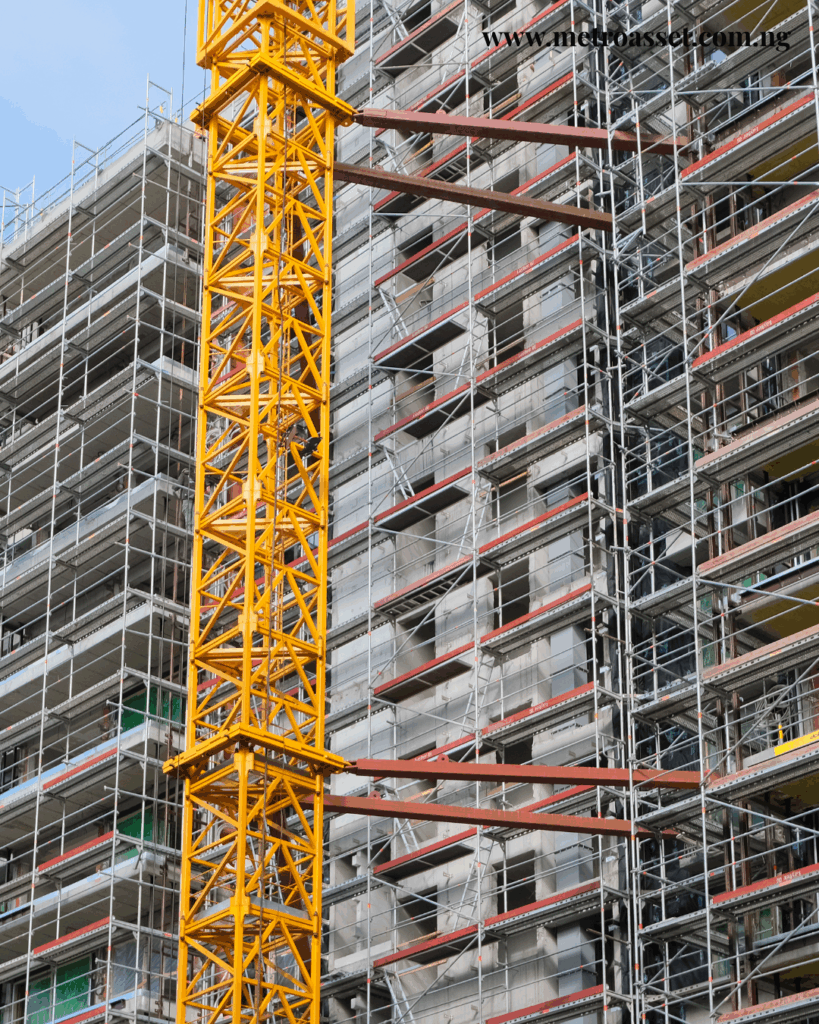
This economic pressure is creating a compelling pivot. Instead of embarking on new builds, investors are increasingly turning towards acquiring existing structures or taking over stalled projects. These “incomplete structures” represent a unique value proposition:
- Discounted Entry Points: Developers in need of liquidity may be willing to offload prime assets below their replacement cost.
- Bypassing Construction Risk: Acquiring an existing building eliminates the risks and delays associated with today’s volatile construction environment.
- Faster Time-to-Market: A completed or near-completed asset can be tenanted and generating income much quicker than a project starting from scratch.
“For medium to long-term investors with patient capital, this is a buyer’s market for quality,” says a Lagos-based portfolio manager specializing in real estate. “You are acquiring brick and mortar in prime locations without having to lay the brick yourself. The key is rigorous due diligence to ensure the underlying asset and title are sound.”
This trend indicates a market correction where capital is flowing towards value preservation and strategic positioning for the next growth cycle.
The Infrastructure Catalyst: Government Spending as a Value Driver
Simultaneously, a more macro-economic story is unfolding that promises to redefine property values across the nation: the government’s massive infrastructure push. The ongoing discussion is no longer about if but how much these projects will transform the real estate terrain.
Flagship projects like the Lagos-Calabar coastal road and significant upgrades to infrastructure in Abuja are more than just public works; they are future value generators for real estate.
The impact is twofold:
- Opening New Frontiers: The coastal road, for instance, is set to open up vast, previously inaccessible stretches of coastline for tourism, hospitality, and residential development. It effectively creates new real estate markets from the ground up, offering first-mover advantages to investors who identify promising nodes early.
- Amplifying Existing Hubs: In established cities like Abuja, road expansions, bridge constructions, and improved transportation networks reduce commute times and alleviate congestion. This enhances the attractiveness and accessibility of surrounding areas, leading to a direct appreciation of land and property values. An area that was once considered peripheral can quickly become a prime suburban hub.
“Infrastructure is the ultimate catalyst for real estate value,” comments an analyst from a leading property consultancy. “We are already seeing speculative interest and early land acquisitions along the proposed corridors of the coastal highway. Investors are essentially betting on the government’s blueprint, anticipating that improved accessibility will trigger a surge in commercial and residential demand.”
The Convergence: A Strategic Outlook
The most astute investors are viewing these two trends not in isolation, but as parts of a cohesive strategy. The ability to acquire a quality asset at an attractive price today is amplified if that asset is located in a region poised to benefit from tomorrow’s infrastructure boom.
The current Nigerian real estate market, therefore, demands a dual-focused approach: a tactical eye for immediate, distressed-value opportunities and a strategic vision for long-term, infrastructure-driven growth. While short-term volatility remains, the medium to long-term outlook is being fundamentally strengthened by these parallel developments, painting a picture of a market in transition, ripe with opportunity for those who know where to look.
#NigeriaRealEstate #InvestmentOpportunity #AbujaRealEstate #LagosRealEstate #Infrastructure #AfricanInvestments