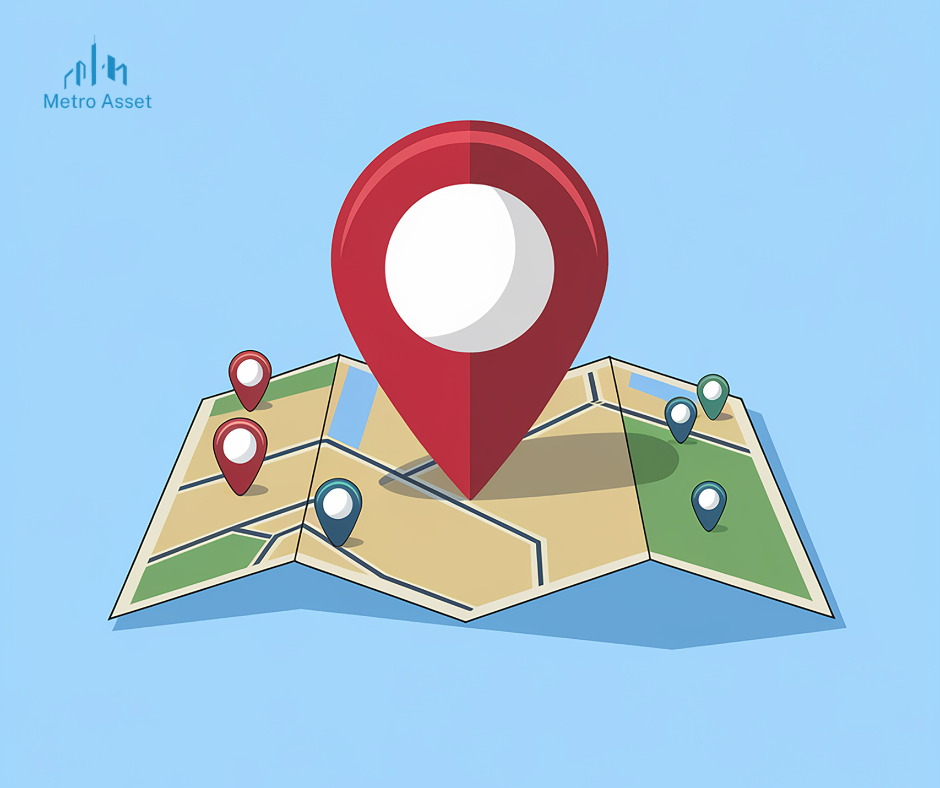
We’ve all heard the mantra: “Location, Location, Location.” In Nigeria, we often nod in agreement, then proceed to choose a business location based on cheap rent, a “gut feeling,” or because a family member owns the property. We sprinkle it with prayers and hope for the best.
But here’s the hard truth: While prayer is a powerful force for guidance and blessing, business requires strategy. God helps those who help themselves, and helping yourself in business begins with a logical, data-driven choice of where to plant your flag.
Many brilliant business ideas in Nigeria have withered and died, not for lack of passion or prayer, but for a fatal flaw often overlooked at the start: a non-viable location.
The Nigerian Fallacy: “A Good Product Sells Itself
The typical Nigerian mindset is, “If I build it, they will come.” We believe in the power of our product so much that we assume customers will traverse bad roads, ignore traffic logjams, and go out of their way to find us. This is a costly fantasy.
In reality, your location is your first and most constant marketing tool. It filters your potential customers before you even say “Welcome!”
One Size Does NOT Fit All: The Unique Location DNA
A crucial concept many miss is that different businesses have fundamentally different location needs. What works for a boutique is suicide for a block industry.
The High-Traffic Hub: Businesses like fast-food joints (e.g., Chicken Republic, Mr. Bigg’s), pharmacies, and convenience stores thrive on impulse buys. They need to be where people already are, busy streets, motor parks, or near offices.
The Destination Spot: Businesses like high-end boutiques, furniture stores, or specialty gyms are destinations. Customers plan to go there. They don’t need prime roadside frontage as much as they need easy access, good parking, and a safe, pleasant environment (think a good plaza in GRA).
The Industrial Necessity: A block industry, a pure water factory, or a haulage company needs space, easy access for heavy vehicles, and proximity to raw materials or construction sites. Placing them in a residential estate is a recipe for complaints and closure.
The Service-Based Proximity: A salon, barbing salon, or nursery school is hyper-local. Its success depends on being the most convenient option for people within a 5-10 minute radius. If you’re not easily accessible to your immediate community, you’ve failed before you’ve begun.
Case Studies: When Great Ideas Met Terrible Locations
The “Classy” Lounge in a Residential Backstreet: I watched a friend invest millions in a beautiful lounge with state-of-the-art sound and decor. The only problem? It was tucked away in a strictly residential area of Ikeja. Residents complained about noise, customers couldn’t find parking, and the “foot traffic” was zero. It was a destination that no one could comfortably get to. It closed in 18 months.
The POS Agent with No “Flow”: Think of the most successful POS agents you know. They are at the bank, the market entrance, or a major bus stop. Now, imagine a POS agent who sets up inside a small compound, away from the main road. No one sees them. No one needs a POS at that moment unless they live there. The business barely makes enough for transport, let alone profit.
My Own Story: The Tech Hub That Wasn’t: (Here’s your personal experience) I once launched a co-working space for tech entrepreneurs. I found a spacious, affordable place in a quiet part of town. The logic was “they need quiet to focus.” I was wrong. Tech entrepreneurs thrive on networking, synergy, and easy access to clients and amenities like fast food and cafes. My location was too isolated. The silence wasn’t golden; it was deadly. We had great facilities but empty seats. It was a painful, expensive lesson that taught me that understanding your customer’s behavior is just as important as understanding their needs.
How to Choose a Viable Location: Move Beyond Chance
Stop leaving your business survival to chance. Do the work:
Define Your Ideal Customer: Who are they? Where do they live, work, and play?
Analyze the Competition (Clustering is Good!): Is there a cluster of similar businesses? This isn’t always bad, it means there’s demand there. Your uniqueness will make you stand out.
Conduct a Foot Traffic Audit: Visit the potential location at different times of the day and week. Are people there? What are they doing?
Check Accessibility and Parking: Can customers easily get to you? Can they park without a 30-minute struggle?
Understand the Costs: Cheap rent in a dead zone is expensive. Expensive rent in a prime location can be a bargain. Run the numbers.
Conclusion: Faith Without Works is Dead
Let’s change our mindset. Pray fervently for your business, but then get up and do the work. Your location is not just an address; it is a core part of your business strategy. It can be your greatest asset or your most insurmountable barrier.
Don’t let your dream become another statistic of a great product in the wrong place. Research, analyze, and choose wisely. Your bottom line will thank you for it.
#LocationNaBusinessKey #NoMoreJagaJagaBusiness #NigerianBusinessStrategy #ChooseWiselyNaija #MarketResearchMatters #MyBusinessMyHustle