What Does It Mean to Be Rich in Nigeria?
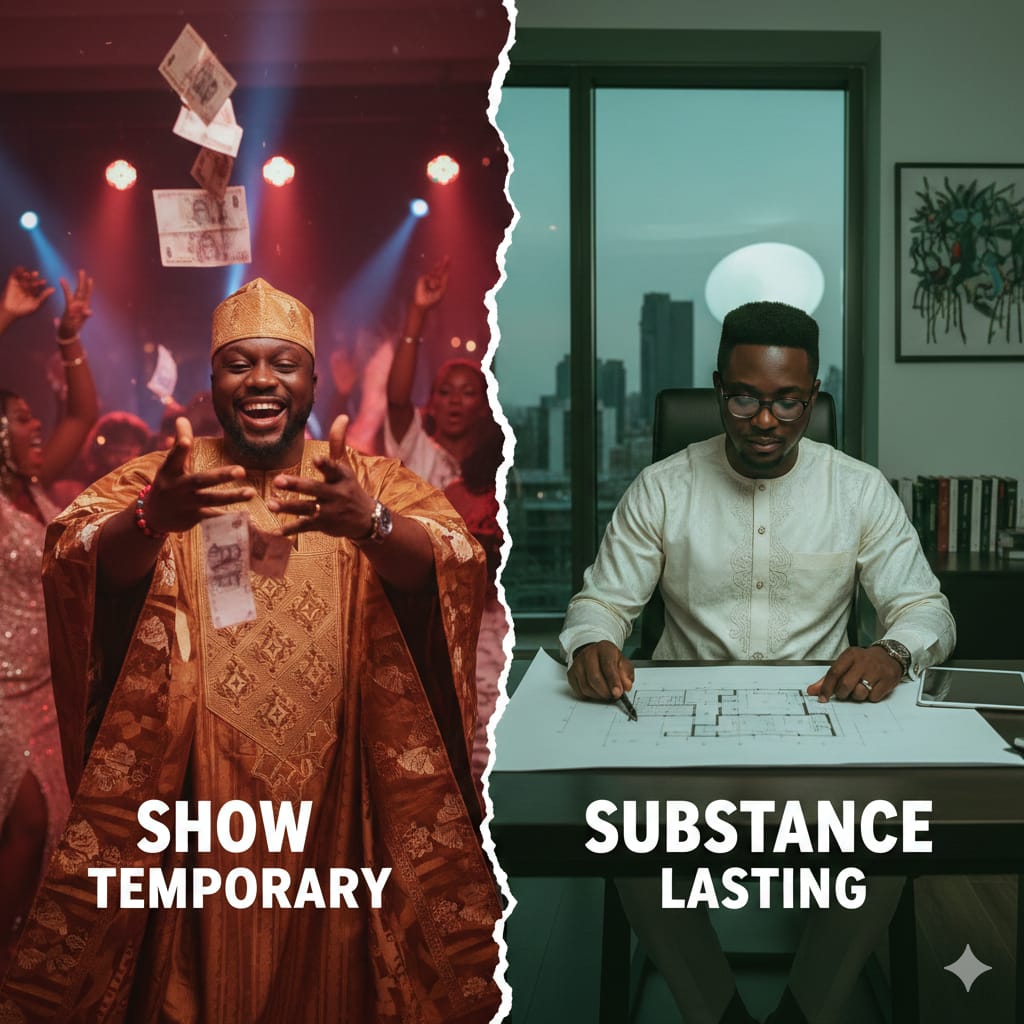
Being “rich” in Nigeria typically means having high cash flow. You have money coming in—maybe from a government contract, a thriving business, a good salary, or “connections.” You can afford nice things: a good car, designer clothes, expensive weddings, and spraying at events.
But here’s the critical question: If your income stopped today, how long would your money last?
For most “rich” Nigerians, the answer is frightening: 3 to 6 months maximum.
According to a 2023 report by Enhancing Financial Innovation & Access (EFInA), 64% of Nigerian adults do not have any savings—and even among high-income earners, less than 30% have investments that generate passive income.
Key takeaway: Being rich is about what comes in. It doesn’t measure what stays in.
What Does It Mean to Be Wealthy in Nigeria?
Wealth is different. Wealth is measured by what you own—not what you spend.
A wealthy Nigerian has:
· Assets that generate income (rental properties, dividend-paying stocks, businesses that run without them)
· Multiple income streams (not dependent on one job or contract)
· Low debt-to-asset ratio (they owe less than they own)
· Generational security (their children and grandchildren will inherit sustainable wealth)
According to the African Wealth Report 2023, Nigeria has about 9,800 high-net-worth individuals (with $1 million+ in investable assets). But here’s what’s interesting: most of them don’t drive the flashiest cars or live in the most obvious mansions. They’re busy building, not showing.
Case Study: Two Lagos Men – Same Street, Different Futures
📊 7 Critical Differences Between Rich and Wealthy Nigerians
- Income Source
Rich: One primary source (contract, salary, politics)
Wealthy: Multiple passive and active streams
- Spending Pattern
Rich: Spends on depreciating assets (cars, clothes, gadgets)
Wealthy: Spends on appreciating assets (land, property, stocks)
- Debt Relationship
Rich: Uses debt for lifestyle (car loans, personal borrowings)
Wealthy: Uses debt strategically (mortgages on rental properties)
- Time Orientation
Rich: Lives for today (“I’ll worry about tomorrow later”)
Wealthy: Builds for generations (“What will my children inherit?”)
- Social Presence
Rich: High visibility (events, Instagram, spraying)
Wealthy: Low visibility (private, selective, lowkey)
- Financial Literacy
Rich: Knows how to make money
Wealthy: Knows how to grow and keep money
- Legacy
Rich: People remember the parties
Wealthy: People inherit the assets
The Nigerian Mindset Problem: “Show” vs “Substance”
Nigeria has a cultural challenge when it comes to wealth perception.
The “Asoebi” Mentality: We spend money we don’t have, on outfits we barely wear, to impress people we don’t even like—all because “wetín people go say?”
The “Spraying” Culture: Throwing money at events feels generous, but it’s often performative. Wealthy people give strategically—investing in people’s education, businesses, and futures—not just tossing notes at parties.
The “Odogwu” Syndrome: We celebrate the appearance of wealth more than its reality. The man with the G-Wagon gets more respect than the man with 10 rental properties—even though the rental property owner could buy the G-Wagon man 10 times over.
According to financial experts at Nairametrics, this mindset keeps Nigerians in a cycle of poverty disguised as prosperity. You look rich, but you’re one emergency away from bankruptcy.
📈 How to Build Wealth in Nigeria: A Step-by-Step Guide
Step 1: Track Your Net Worth, Not Just Your Income
Open a spreadsheet (or use apps like PiggyVest, Cowrywise, or Risevest). List:
· What you own (cash, investments, properties, businesses)
· What you owe (loans, debts, borrowings)
Your net worth = Assets – Liabilities.
Target: Increase net worth by 20% annually, not just income.
Step 2: Create Multiple Income Streams
Wealthy Nigerians have at least 3-5 income sources. Examples:
1. Primary job/business
2. Rental income (shops, apartments, land)
3. Dividend stocks (Nigerian banks, consumer goods companies)
4. Fixed income (Treasury Bills, Bonds)
5. Digital assets (YouTube, e-books, online courses)
Step 3: Buy Assets, Not Liabilities
Before any major purchase, ask:
· Will this generate income?
· Will this appreciate in value?
· Will this free up my time or chain me to more work?
Asset examples: Land in developing areas (Ibeju-Lekki, Sango Ota, Lugbe), dividend stocks, treasury bills, businesses you don’t physically run.
Liability examples: New cars (depreciate 20% immediately), designer clothes, the latest iPhone every year.
Step 4: Live Below Your Means (Yes, Even When You “Make Am”)
If you earn ₦10 million/year, live on ₦4-5 million. Invest the rest.
This is hard in Nigeria because of social pressure. But wealthy people understand that every ₦1,000 spent on flex is ₦1,000 not working for you.
Step 5: Invest in Knowledge
The richest people in Nigeria didn’t get there by accident. They understand:
· Real estate markets
· Stock market fundamentals
· Business systems
· Tax optimization (legally)
Recommended reading:
· The Millionaire Next Door (Thomas Stanley)
· Rich Dad Poor Dad (Robert Kiyosaki)
· Think and Grow Rich (Napoleon Hill)
· Smart Money Woman (Arese Ugwu) – Nigerian context!
Step 6: Protect Your Wealth
· Insurance: Life, health, and property insurance
· Estate planning: Write a will (most Nigerians don’t!)
· Diversification: Don’t put everything in one asset class
· Trusted advisors: Work with reputable lawyers, accountants, and financial advisors
Step 7: Build Generational Wealth
True wealth outlives you. Ask:
· Will my children inherit assets or debts?
· Will my grandchildren benefit from my work?
· Have I documented my assets and wishes
❓ Frequently Asked Questions (FAQ) –
Q: What is the difference between being rich and being wealthy in Nigeria?
A: Being rich means having high income—money flowing in. Being wealthy means having high net worth—assets that generate income even when you’re not working. Rich is temporary; wealth is permanent.
Q: How can I become wealthy in Nigeria?
A: Build multiple income streams, invest in assets (real estate, stocks, businesses), live below your means, and prioritize financial education. Avoid lifestyle inflation and “show” spending.
Q: Are most rich Nigerians actually wealthy?
A: No. Many high-income Nigerians have low net worth because they spend on liabilities (cars, clothes, events) instead of assets. True wealth is measured by what you keep, not what you earn.
Q: What assets should I invest in Nigeria?
A: Real estate (land in developing areas, rental properties), Nigerian stocks (banking, consumer goods), government securities (Treasury Bills, Bonds), and businesses with passive income potential.
Q: How much money do I need to be wealthy in Nigeria?
A: Wealth isn’t about a specific number—it’s about sustainability. If your assets can maintain your lifestyle without active work for 10+ years, you’re wealthy. For some, this might be ₦50 million; for others, ₦500 million.
Q: Why do wealthy Nigerians drive modest cars?
A: Because they prioritize assets over appearances. They’d rather own three houses than drive one expensive car. Wealthy people understand that flashy spending keeps you poor.
Q: Can I build wealth on a salary in Nigeria?
A: Yes. Start with disciplined saving (at least 20-30% of income), invest consistently, and build side income streams. Many wealthy Nigerians started with salaries but invested wisely.
📊 Statistics That Matter (Cite Sources for Authority)
· 64% of Nigerian adults have no savings (EFInA, 2023)
· 51% of high-income Nigerians live paycheck to paycheck (PwC Nigeria, 2022)
· 9,800 Nigerians have $1M+ in investable assets (African Wealth Report, 2023)
· Real estate accounts for 60%+ of wealth for most Nigerian millionaires (Stenbank Research)
· Only 1% of Nigerians have a written will (Trusted Advisor, 2023)
Need help implementing these changes or want custom content for your real estate business?
📞 Contact me: 08139996843
#WealthVsRich #NigerianMoney #FinancialFreedomNigeria #LagosRealEstate #PassiveIncomeNaija #NaijaMillionaire #MoneyMindsetNG #InvestInLagos #NigeriaProperty #SmartMoneyNG #HowToBeWealthyInNigeria #RichDadPoorDadNigeria #NigerianRealEstateInvestor #LagosWealthBuilding #FinancialLiteracyNG #AssetBuilding #GenerationalWealth #NigeriaInvestments #RealEstateNigeria #LagosProperty