Reaching for the Sky: Why High-Rise Buildings Are Redefining the Lagos Skyline in Ikoyi, VI, and Lekki
Lagos, a city perpetually in motion, is known for its sprawling urban landscape. But look closely at its most sought-after neighbourhoods – Ikoyi, Victoria Island (VI), and Lekki Phase 1 – and you’ll notice a dramatic shift happening on the skyline. Once dominated by detached houses and low-rise blocks, these areas are now witnessing a rapid emergence of sleek, modern high-rise buildings. It’s not just a change in architecture; it reflects powerful economic, social, and environmental forces shaping the future of Nigeria’s commercial heart.
So, why are these prime locations suddenly reaching for the sky? The reasons are multi-layered and fascinating:
1. The King is Land, and Land is Scarce (and Expensive!)
This is perhaps the most significant driver. Ikoyi, VI, and Lekki Phase 1 are arguably the most desirable addresses in Lagos, home to businesses, expatriates, and affluent Nigerians. Decades of development mean available land is incredibly scarce, and the plots that are available come with astronomical price tags. When land costs so much, building outwards horizontally becomes economically impractical. The only way to maximize the value and potential of a limited plot is to build upwards, accommodating more residents or businesses on the same footprint. High-rises are simply the most efficient way to use prohibitively expensive land.
2. A City Bursting at the Seams: Population Growth and Urbanization
Lagos’s population continues to grow at an astonishing rate. This relentless urbanization fuels an ever-increasing demand for residential and commercial space. While new areas are being developed, the established infrastructure and prestige of Ikoyi, VI, and Lekki Phase 1 make them highly attractive hubs. High-rise developments offer a way to absorb some of this population pressure in already built-up areas, providing housing and office solutions without constantly pushing the city’s boundaries outwards at the same pace.
3. The Allure of Luxury and Modern Living
High-rise buildings in these prime areas aren’t typically your average apartment blocks. They are often designed as luxury residences or Grade A office spaces, packed with modern amenities that appeal to a specific market. Features like integrated security systems, reliable power supply, high-speed internet, swimming pools, gyms, landscaped recreational areas, and concierge services offer a lifestyle or working environment that detached houses often cannot match as conveniently. There’s a growing segment of the population that desires this all-in-one, secure, and facilitated living or working experience.
4. Changing Lifestyles and Preferences
Gone are the days when the ultimate status symbol was solely a large detached house. A new generation of successful professionals, smaller families, and even some downsizers are finding the convenience and communal amenities of high-rise living increasingly appealing. Reduced maintenance worries, enhanced security, and proximity to business and leisure hubs make high-rise apartments a practical and desirable choice for a modern urban lifestyle.
5. Investment Hotspot
Lagos real estate, particularly in prime locations, is viewed as a strong investment. High-rise developments represent significant capital projects that attract both local conglomerates and international investors. The potential for high rental yields and capital appreciation in these desirable areas makes investing in vertical developments an attractive proposition, further fueling their construction.
6. Prestige and Status
Let’s not ignore the element of prestige. Owning a penthouse or having an office in a prominent high-rise in Ikoyi, VI, or Lekki Phase 1 is often
associated with a certain level of success and status. This perception contributes to the demand and desirability of these properties.
What Does This Mean for the Skyline?
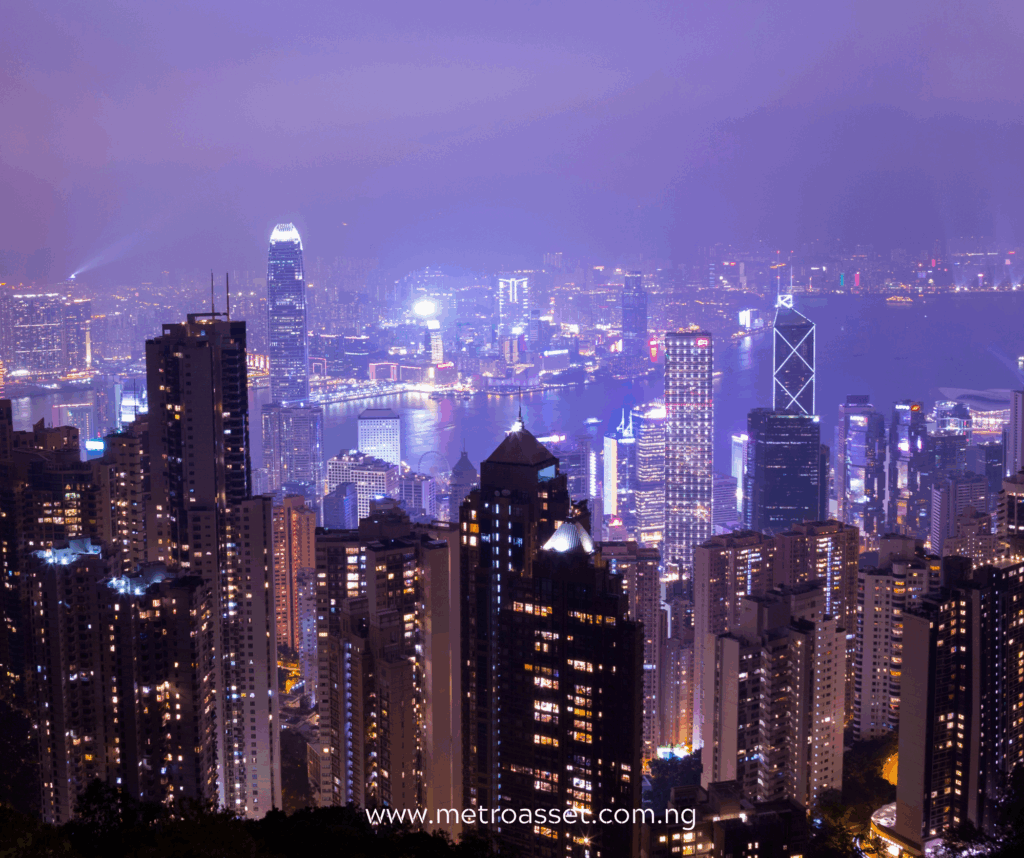
The result is a rapidly transforming visual identity for these neighbourhoods. Towering residential blocks with sleek glass facades stand alongside established homes, and modern office towers punctuate the horizon in commercial districts. This vertical growth concentrates people and activity, bringing both opportunities and challenges related to infrastructure, traffic management, and preserving the character of the areas.
The emergence of high-rise buildings in Ikoyi, Victoria Island, and Lekki Phase 1 is a clear indicator of Lagos’s evolution as a megacity. Driven by the fundamental economics of land scarcity, coupled with growing demand for modern, serviced spaces and changing lifestyle preferences, these vertical developments are not just changing the physical landscape but also reflecting the dynamic aspirations of its residents and businesses. It’s a trend set to continue, pushing the Lagos skyline ever higher.