A Comprehensive Guide to Understanding Land Ownership, Family Claims, and Ongoing Disputes in One of Lagos’s Hottest Real Estate Corridors.
Introduction: A Fishery That Became a Goldmine
For decades, land in Ajah was dismissed as swamp and farmland. Today, it is one of the most valuable real estate corridors in Lagos. But beneath the glittering new estates lies a complex web of chieftaincy families, ancestral claims, and active legal battles that every serious investor must understand.
In this guide, you will learn:
- ✅ When and how Ajah land became valuable (price history from N100k to N60m+)
- ✅ Which families own what – Ogunsemo, Ojupon, Odugbese Abereoje, Olumegbon, Ajiwe, Omomunmi Oja
- ✅ Current disputes still lingering in 2026 (Okun-Ajah, Oko-Addo, Lagos-Calabar road, chieftaincy forgery)
- ✅ How to buy land in Ajah without losing your money (10-step due diligence)
H2: When Did Land in Ajah Become Valuable? A Timeline
H3: 1704–1990 – The Quiet Fishing Settlement
Ajah was founded around 1704 by three families: Ogunsemo, Ojupon, and Odugbese Abereoje. For centuries, the land was used for fishing and subsistence farming. The 1972 Maroko acquisition (Gazette No. 173) set a legal precedent – the Lagos State Government could acquire large tracts, paying compensation to chieftaincy families.
H3: 1990–2010 – The Inflection Point
- 1990s: Construction of Lekki-Epe Expressway and Victoria Garden City (VGC) began attracting attention.
- Year 2000: A plot of land in Ajah cost just ₦100,000.
- 2001: Abraham Adesanya Housing Estate inaugurated by Governor Bola Tinubu – a major anchor.
- 2010: Prices rose to ₦1.5–₦3 million per plot.
H3: 2010–2025 – Explosive Appreciation
Drivers of value:
- Infrastructure: Lekki Free Trade Zone, Dangote Refinery, Lekki Deep Sea Port.
- Population pressure from Victoria Island and Lekki Phase 1.
- Speculative buying by early investors.
Current prices (2026): ₦20 million – ₦60 million per plot in prime estates. Some premium locations exceed ₦80 million. Annual appreciation rates in parts of Lagos: 10–15% over two decades.
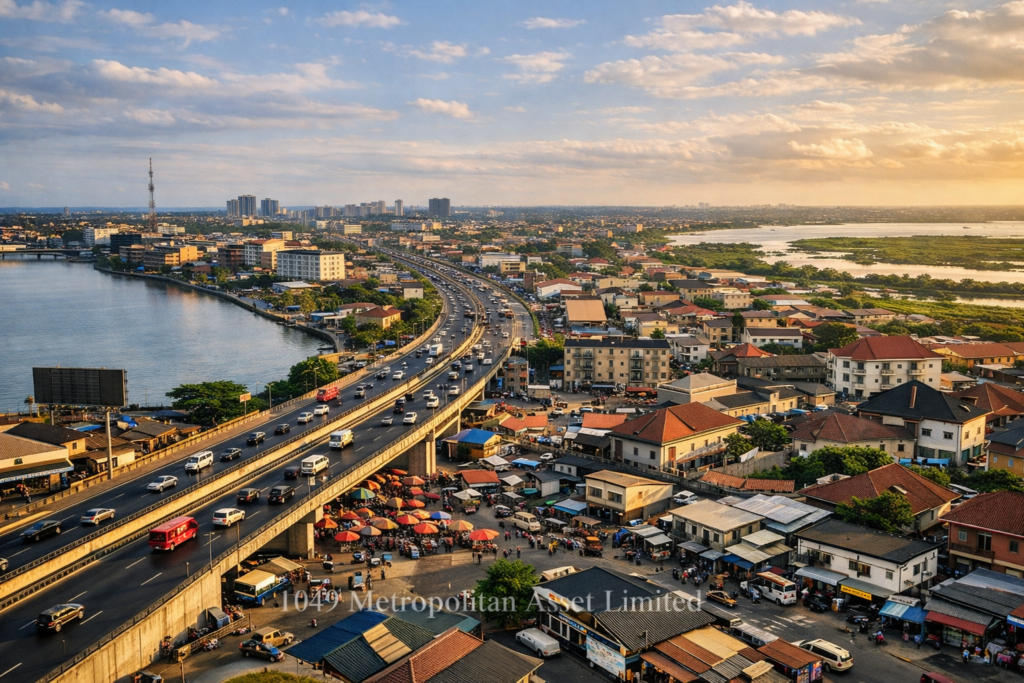
📈 Key takeaway: Land in Ajah has outperformed almost every other Lagos suburb. But buying blindly is risky without knowing who really owns the land.
H2: Which Families Own Land in Ajah? The Chieftaincy Structure
If you want to buy land in Ajah safely, you must understand the customary owners. There is no single “owner” – the land is divided among 42 chiefs and 10 kingmakers (King Mikas).
H3: The Three Founding Families
| Family | Role |
|---|---|
| Ogunsemo | One of the first settlers; traditionally supplies the Baale (community head) |
| Ojupon | Founding family; jointly holds customary rights |
| Odugbese Abereoje | Founding family; successfully defended 17.7 hectares in Ajiwe (High Court, 2016) |
The 11th Baale of Ajah (as of 2009) is Chief Murisiku Alani Oseni Adedunloye Ojupon.
H3: Major Landowning Chieftaincy Families
Olumegbon Chieftaincy Family
- Claims vast tracts in Ajah and Okun-Ajah kingdom
- Legal judgments on their land date back to 1896, including Supreme Court rulings
- Currently embroiled in a signature forgery crisis (2026) – see disputes section
Odugbese-Abereoje Chieftaincy Family
- Won a 2016 High Court judgment against Lagos State over 17.707 hectares at Ajiwe
- Case illustrates that customary ownership can defeat government allocation
Ajiwe Family
- Recently reclaimed their land at the Supreme Court level (within last 2 years)
Omomunmi Oja Chieftaincy Family
- Claims 58 acres at Oko Egan Alapa village
- In dispute with Ajah Community Development Association (Suit No. EPD/7325/LMW/2018)
H3: What This Means for a Land Buyer
You are not buying from the government. You are buying from customary owners (or their assignees). A valid Deed of Assignment must trace title back to one of these families. The US-based doctor who won ₦5.5 million damages against Olumegbon family succeeded because she proved her chain from Ojupon and Ogunsemo families.
H2: Current Land Disputes in Ajah – What’s Still Lingering in 2026
Here are the active and recent disputes that could affect your purchase. Always check if your intended plot is under litigation.
H3: 1. Okun-Ajah & Mayegun Dispute (Resolved May 2025 – But Lessons Remain)
- Issue: Over 200 allottees faced eviction due to government acquisition.
- Resolution: Lagos State regularized their documents, sparing them.
- Lesson for buyers: Many had no idea they built on government land. Due diligence would have revealed the acquisition.
H3: 2. Olumegbon Chieftaincy Family Crisis (Ongoing – April 2026)
- Allegations: Signature forgery on chieftaincy documents; a monarch accused of selling ancestral land using police clout.
- Status: Forensic analysis reportedly confirmed forgery; case in court.
- Risk for buyers: When a family is divided over who can sell, you could buy from the wrong faction.
H3: 3. Oko-Addo Land Grabbing Allegations (March 2025)
- What happened: Armed land grabbers (allegedly with army officer backing) demolished houses.
- Claim: Land belongs to indigenes from King Addo’s lineage.
- Status: Court had ordered status quo; demolition proceeded anyway.
H3: 4. Lagos-Calabar Coastal Road Project – Okun Ajah (2025–2026)
- Foreign investors claim $250 million+ losses due to road alignment diversion affecting Winhomes Global Services estate.
- Landowners say a Federal High Court ruling (Nov 21, 2025) resolved ownership in their favor.
- Civil society alleges “state-backed oppression.”
H3: 5. Ajiwe Land Dispute (Odugbese-Abereoje vs. Lagos State & Developer)
- Background: Family won 2016 judgment. State allegedly allocated same land to a developer while appeal was pending.
- Status: Family sought injunction; still unresolved.
H3: Key Takeaway from Disputes
Ancestral claims are not automatically superior to a properly registered Deed. The US doctor’s case proves that documentation + registration can defeat even powerful chieftaincy families.
H2: How to Buy Land in Ajah Without Losing Money – 10-Step Due Diligence
If you are considering buying land in Ajah, follow this checklist. Skip any step at your own risk.
H3: Step 1 – Verify Chain of Title to Customary Owners
Engage a lawyer to trace the Deed of Assignment back to the Ogunsemo, Ojupon, Odugbese Abereoje, or other recognized chieftaincy family. Search the Lagos State Land Registry (Alausa).
H3: Step 2 – Check for Government Acquisition
Search the Official Gazette for acquisition notices (e.g., Maroko 1972 precedent). Your lawyer must do this.
H3: Step 3 – Obtain and Perfect a Valid Title
Receipts and survey plans are not enough. You need one of:
- Certificate of Occupancy (C of O)
- Governor’s Consent on a Deed of Assignment
- Gazette excision from acquisition
H3: Step 4 – Physical & Virtual Site Inspection
Do not buy sight unseen. Swamp, canals, drainage routes, and government setbacks are common traps.
H3: Step 5 – Verify Zoning with LASPPPA
Lagos State Physical Planning Permit Authority. If you buy agricultural land and build commercial, demolition is real.
H3: Step 6 – Avoid Canals & Waterways
Ajah is low-lying (0.5–5m above sea level). Visit LASPPPA for approved layouts and a registered surveyor.
H3: Step 7 – Hire Professionals, Not Just Agents
You need a real estate lawyer and, ideally, a property consultant who knows local Omo-Onile dynamics.
H3: Step 8 – Be Skeptical of Unrealistic Prices
If a plot is far below ₦20–60 million range, assume fraud or litigation.
H3: Step 9 – Investigate Active Litigation
Your lawyer should check court records for any pending suits affecting the land (e.g., Omomunmi Oja suit).
H3: Step 10 – Understand the Omo-Onile Factor
Some Omo-Onile are legitimate family representatives; many are not. Your lawyer must verify written authorization from the chieftaincy family.
H2: Frequently Asked Questions (FAQ) About Ajah Land
H3: Who is the original owner of Ajah land?
The three founding families – Ogunsemo, Ojupon, and Odugbese Abereoje – first settled Ajah around 1704. Over time, they shared land with 42 chiefs and 10 kingmakers.
H3: Is it safe to buy land in Ajah?
Yes, if you do proper due diligence. Many investors have built generational wealth. But without verifying title, government acquisition, and active disputes, it is risky.
H3: What is the current price of land per plot in Ajah (2026)?
₦20 million to ₦60 million for standard plots (approx. 300–500 sqm) in decent estates. Premium locations near major roads can exceed ₦80 million.
H3: Which families are fighting over land in Ajah right now?
- Olumegbon (internal chieftaincy crisis, forgery allegations)
- Omomunmi Oja vs. Ajah Community Development Association
- Odugbese-Abereoje vs. Lagos State & developer (Ajiwe)
- Oko-Addo indigenes vs. alleged land grabbers
H3: Can the Lagos State Government take my land in Ajah?
Yes, under the Land Use Act, the government can acquire land for public purposes – but compensation is payable. Always check if the land has already been acquired via Gazette.
H3: What is the difference between a Deed of Assignment and a C of O?
A Deed of Assignment is a private transfer document. A Certificate of Occupancy (C of O) is a statutory title from the government. A Deed is valid only if accompanied by Governor’s Consent (for land in urban areas).
H2: Final Advice from a Decade of Lagos Real Estate Experience
Ajah is not for the naive. The chieftaincy system is complex but navigable. Disputes are real but manageable. The government’s power of acquisition is ever-present but can be checked.
The single biggest mistake buyers make: believing that a receipt or a pretty survey plan equals ownership. It does not.
The smart buyer’s mantra: “I will not pay a kobo until my lawyer has traced the title back to a recognized chieftaincy family, checked the Gazette, and confirmed no pending litigation.”
Let the story of Ajah be one of opportunity seized with wisdom. The land is waiting. Go in with your eyes open.
Call to Action
📌 Save this guide – bookmark it for when you negotiate your next land deal in Ajah.
📩 Share with someone planning to buy property along the Lekki-Epe corridor.
🔍 Need help verifying a specific plot? Consult a Lagos-based real estate Brokerage Firm (1049 Metropolitan Asset Limited)
Disclaimer: This article is for educational purposes and does not constitute legal advice. Always retain a qualified legal professional before completing any land transaction in Nigeria.